Why Mounting Matters for Lab Performance – Expert Interview with Olafur

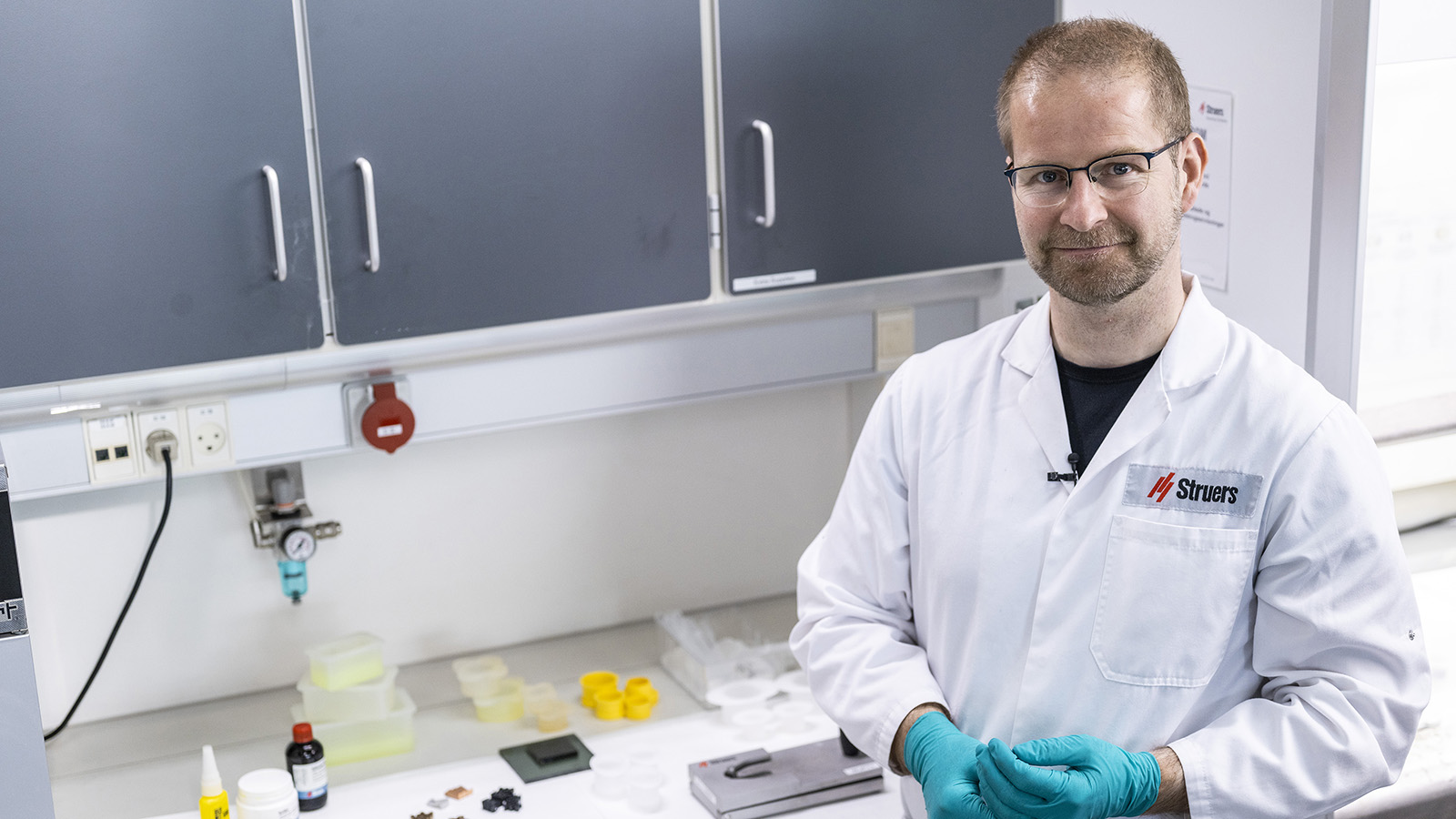
To understand why mounting has such a strong influence on specimen preparation, we spoke with Ólafur Magnús Ólafsson, an experienced Application Specialist at Struers. Ólafur works closely with laboratories around the world, helping them troubleshoot preparation challenges, refine workflows, and achieve more consistent, reproducible results. Drawing on this practical experience, he explains why mounting is often underestimated and how improving it can prevent many of the issues labs face every day.
Find out what he had to say and get his best advice.
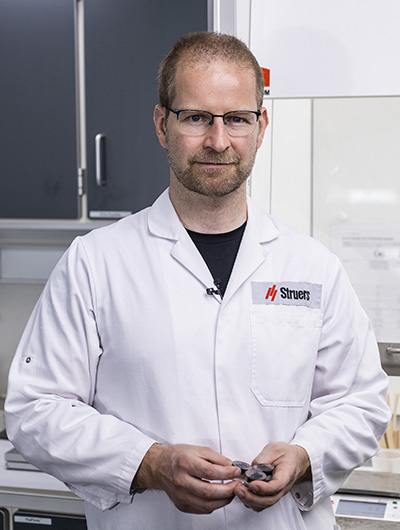
Application Specialist Ólafur Magnús Ólafsson.
How important is mounting really?
If mounting is required, then it can have a significant impact on the specimen preparation process. In fact, insufficient or poor mounting is one of the leading causes of preparation issues and frustrations in labs. When mounting isn’t done properly, it can result in poor adhesion between the resin and the specimen, which leads to gap problems. If a gap is present, then the specimen edges have no support. You can expect edge rounding, cracking, and poor edge retention amongst other things.
A gap is also a major source of contamination in the lab. Contamination issues can cause surface deformation, large scratches, and problems when cleaning, etching, and analyzing.
If the gap is large, it becomes very difficult to standardize your processes because you can’t control what enters the gap or when it comes out of the gap again. This is one of the most common sources of contamination worldwide and often leads to time‑consuming rework and a lot of frustration.
Mounting is really a control point for the entire preparation process. When it’s done correctly, it stabilizes the specimen, protects the edges, and ensures uniform material removal. When it’s not, the consequences show up later as rework, artifacts, and inconsistent results. So, for lab performance, mounting directly affects quality, efficiency, and reproducibility.
Why do you think mounting is often underestimated?
Mounting is often taken for granted. One reason might be that you can’t immediately evaluate the quality of a mount right after the mounting step. The problems become noticeable during the next steps: grinding, polishing, cleaning, or even later while analyzing the specimen in the microscope.
And when an issue is first noticed at the very last step, then it becomes a very expensive preparation process as you might need to repeat some if not all the surface preparation steps. Our focus is always on having a standardized process that is repeatable and reproducible, and poor mounting can have a significant impact on that.
How do labs get the best mounting results?
If you’re experiencing issues with mounting, then there are a few things you can do that we see make a big difference in labs around the world.
First, make sure the specimens you want to mount are properly cleaned, so they are free of cutting debris, oils, and grease that could interfere with curing. After cleaning, handle the specimens with gloves or tweezers, not bare fingers.
Next, knowing the material and knowing what analyzes to perform will help select the right mounting technique. For example, if you’re dealing with temperature‑ or pressure‑sensitive materials, cold mounting or UV mounting is recommended. If the specimens are very hard or you need a fast mount for a single specimen, hot mounting is a good choice. And for both cold and hot mounting, there are different resins available, designed for different applications.
So, if you’re experiencing issues like gaps or rounding, then there’s often an alternative approach that can help you avoid those problems.
Learn more in the full Metallographic Mounting Insight
How do you figure out which mounting technique is the best fit?
For any materialographic lab, it’s important to have an overview of the materials coming into the lab and to know what analysis will be performed. If you have that information, it becomes much easier to select the right mounting technique and the right resin for your preparation process.
Hot, cold, and UV mounting all have their pros and cons. The right choice depends on your material groups, the geometry of your specimens, and the type of analysis you need to perform.
Gain deeper insights on our mounting knowledge website.
Do you want to learn more about Struers' different mounting techniques and solution?
What improvements can labs expect when mounting is optimized?
When mounting is optimized, labs typically experience:
- More standardized preparation processes (leading to reproducibility, repeatability, and the desired quality)
- Fewer contamination issues
- Less rework
- Better use of consumables
- Reduced cost per specimen
- Fewer mounting‑related artifacts such as gaps and rounding
If you could give lab managers one piece of advice, what would it be?
I would say: look at the entire preparation process in the lab from start to finish. Mounting is a crucial step, and if it is done poorly, it will affect every subsequent step.
Mounting itself is a simple step and doesn’t require much training—but despite that, it’s one of the most common sources of issues and frustrations related to specimen preparation. Getting it right makes everything that follows much easier.