About cutting
Separation of the specimen from the workpiece is the essence of materialographic cutting.
The requirements listed below for the extraction of the specimen are linked to how to select the specimen, but also to the effects introduced to the material during the cutting process and to the cutting process itself.
- The specimen must represent the features of the parent piece or component from which it is taken.
- The cut-off wheel must not get blocked when cutting.
- The cut-off wheel must endure only minimal wear.
- The specimen must be cool to touch when taken out of the machine.
- There must be no thermal damage/burning of the specimen surface.
- There must be a smooth and uniform surface with homogeneous scratches.
- There must be a minimum of burrs.
For the sectioning itself, a broad variety of methods can be used, but to meet the demands for a materialographic cut, only very few techniques are feasible, of which wet abrasive cutting will be described below.
Abrasive Wet Cutting

Abrasive wet cutting is the most appropriate materialographic cutting method, as it introduces the least amount of damage in relation to the time used for the process. Abrasive wet cutting employs a cut-off wheel, consisting of an abrasive and a binder. Cooling liquid flushes the wheel to avoid damaging the sample with frictional heat. The coolant also removes debris from the cutting area.
The combination of cutting machine, clamping tools, cut-off wheel, cooling liquid, and a set of parameters including cutting mode, feed speed, and rotational speed, all together, determines the quality of the cut. A guide to the selection of these points is given below.
How to Cut
Select cut-off machine
The size of the workpiece determines the size of the cut-off machine as the piece should fit into the cutting chamber, and the cut-off wheel diameter is large enough to cut through the piece.
- Moving the workpiece or the cut-off wheel in three directions in the machine (x, y, and z) can be pre-defined in the programming of an automatic cut-off machine or done by an operator in a manual cut-off machine.
- Cut-off machines will offer different possibilities for selecting cutting modes which can expand the size and material range of the workpiece.
- The precision of the cut, the ability to hit a determined cutting line close to the area subject for the examination, for example, is also defined by the equipment. Precision cut-off machines can position the workpiece with an accuracy down to a few microns.
Choice of Clamping Solution
The primary purpose of clamping is to fixate the workpiece during the cutting operation. This task can be solved in various ways and has a very important impact on the quality of the cut.
The time spent for the total cutting process is largely affected by the choice of clamping, since the solution involving one or more clamping/unclamping operations can be very time consuming.
Simple or complex geometries, one or multiple samples to be cut, fragile or sensitive materials, and many different samples or recurring cutting of identical parts are some of the points to consider in the choice of clamping solution. The machine used for the cutting offers some possibilities or limitations for the clamping given by the movement of the cutting table or cut-off wheel, for example.
The placement of the workpiece relative to the wheel also affects the cutting quality:
- Clamp below the front part of wheel for the optimum usage of coolant.
- Clamping on both sides of wheel prevents burrs at the bottom of a cut. To avoid the material with great internal stress, to clamp the cut-off wheel, and, in the worse cases, to stop it from rotating.
- Clamp lightly on the part that is to be cut off for most applications.
The standard or unique requirements defining materialographic cutting is addressed by a large selection of standardized universal clamping tools for fast clamping, vertical clamping, clamping of round bars, spheres, tubes, bolts, etc., and an offer to have a clamping tool customized for special needs. Custom-made clamping solutions can accommodate various needs, such as the need for a decreasing number of clamping operations for saving time or special designs for optimizing cutting quality for difficult geometries.


Choice of Cut-off Wheel
The wheel's characteristic is a crucial factor, and the choice of wheel depends primarily on the material to be cut. Abrasive cut-off wheels are defined by:
- Design of the wheel
- Type of abrasives
- Type of bond
Differences in the design include dimensions, like diameter and thickness, and the placement of the abrasives as either a continuous rim in the circumference or distributed in the complete body of the cut-off wheel. Differences in the size and concentration of the abrasives offer possibilities to optimize the performance.
The optimum choice of abrasives for different materials is given below for bakelite-based cut-off wheels:

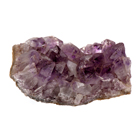
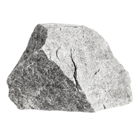
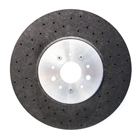
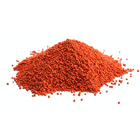
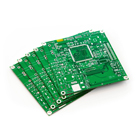
Diamond abrasives in a metal bond are mostly used for non-metals with moderate hardness
such as:
Struers facts
Selection of Cutting Mode and Parameters

Feed speed
For materialographic cutting, the feed speed is usually below 1.0 mm and adjusted for a given cut-off wheel and the sample to be cut. Too low a feed speed will prolong the cutting process unnecessarily, while a too high feed speed increases the risk of thermal burns.

Rotational Speed
Adjusting this parameter provides the possibility to reduce the range of necessary consumable cut-off wheels when materials of different hardness have to be cut. Instead of changing cut-off wheels, the rotational speed is adjusted, and a hard wheel can act like a soft wheel by reducing the rotational speed and vice versa.
Cutting mode
Direct cut is the most used cutting mode where the cut-off wheel is moved directly into the workpiece.
For the improvement of the direct cut or expansion of the application range for a machine or cut-off wheel, other cutting modes can be beneficial. In general, the improvement is linked to decreasing the contact area throughout the cutting process, which can give several advantages:
- When the force per contact area increases, harder materials can be cut. Standard materials are cut faster, and the wheel wear can be reduced. A harder wheel than that used for a direct cut can be used for a given material.
- Since the contact area constantly changes, cooling is improved. In turn, this means a reduced risk of damages to the workpiece and reduced work in the preparation following the cutting.

ExciCut
Suitable for hard materials. Faster cutting. Improved cooling during cutting. Reduced risk of damage to the workpiece. Less work after cutting.

AxioCut
Suitable for extra-large workpieces For cutting of larger workpieces, an additional 150 mm cutting capacity is available with AxioCut. This cutting mode allows the cutting of deep workpieces. Step cutting offers very fast cutting, whereas sweep cutting offers fast cutting combined with better wheel economy and offers a very smooth cut.

Rotational Cut and Oscillating Cut
Suitable for cutting of ultra-hard materials.
Troubleshooting - cutting
Cooling
Cutting fluids are a prerequisite for wet abrasive cutting and serves as cooling, flushing, lubrication, corrosion protection, and bacteria prevention media.
Positioning of the workpiece and choice of cutting mode can help to direct the cutting fluid into the cutting zone. If flexible water hoses are available in the machine, the optimum placement of the outlet is perpendicular to the cut-off wheel.

6 ways to improve the speed and efficiency of your cutting
A fast and efficient sample analysis process starts with the cutting and sectioning. Get your cutting right to improve your sample quality and save time in the next step of the process.
- Improve your cutting precision
- Increase reproducibility
- Step up the speed of your cutting and sectioning
Partner with the industry expert
No matter what you need, Struers has a solution that fits. Contact us today to start your own optimization process.